
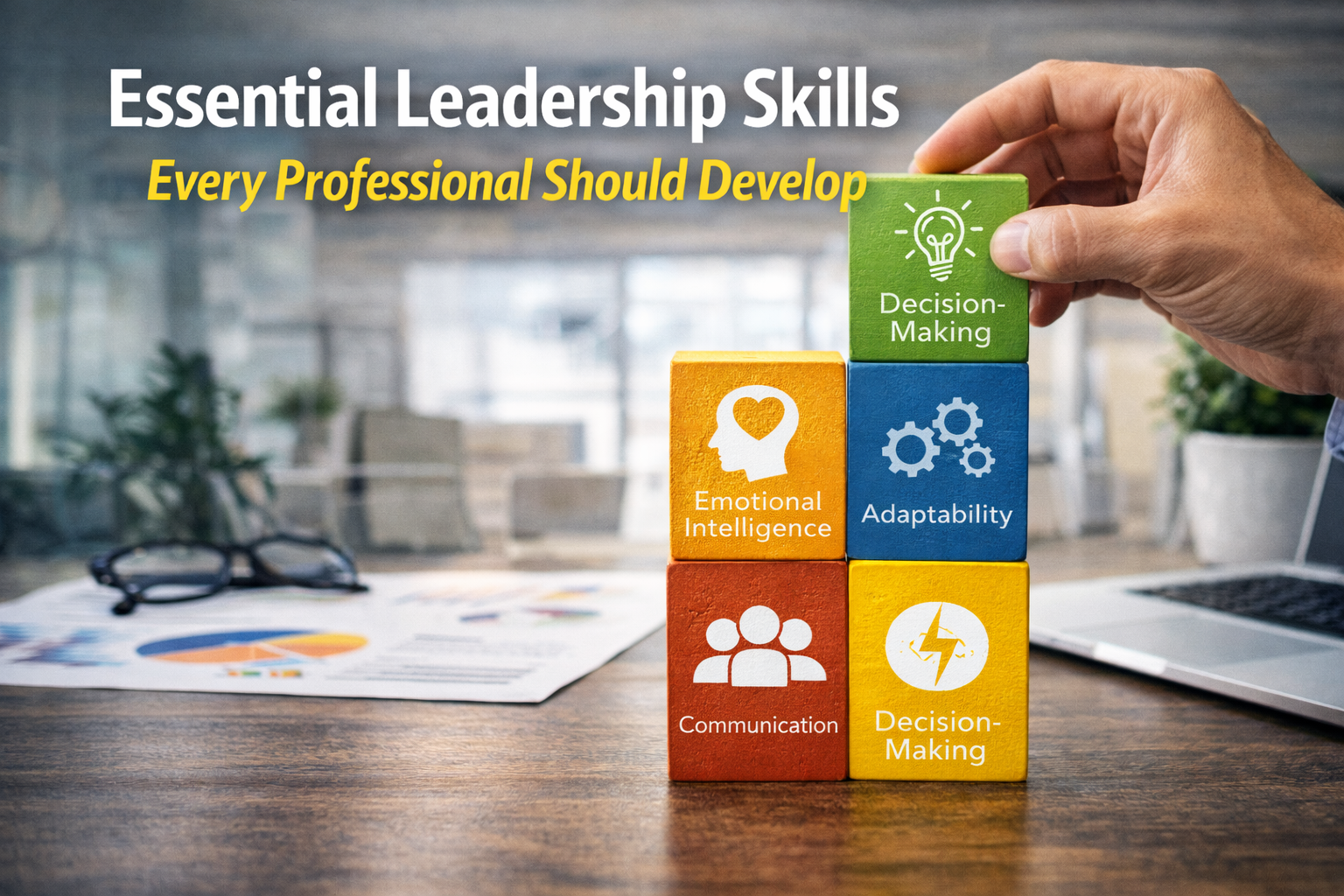
Leadership is no longer limited to individuals in formal management positions. Contemporary research in organizational psychology, workforce analytics, and management science consistently shows that leadership skills are critical at every career stage. In modern workplaces characterized by collaboration, rapid change, and cross-functional teams, leadership is defined by influence, communication, accountability, and adaptability rather than hierarchy alone.
Developing leadership competencies improves not only individual performance but also team effectiveness and long-term organizational success. Evidence from global workforce studies confirms that leadership skills are directly linked to employee engagement, innovation, and career mobility.
Why Leadership Skills Matter in Today’s Workplace
The structure of work has changed significantly over the past two decades. According to the World Economic Forum in its Future of Jobs Report 2023, analytical thinking, leadership, and social influence rank among the top core skills required across industries. The report highlights that organizations increasingly value human-centered competencies alongside technical expertise.
Data from Gallup shows that managers account for at least 70% of the variance in employee engagement. Engagement, in turn, is strongly associated with productivity, profitability, and retention. These findings suggest that leadership behaviors significantly shape workplace outcomes, regardless of formal authority.
As workplaces become less hierarchical and more collaborative, professionals who demonstrate leadership capabilities contribute more effectively to shared goals and organizational resilience.
Communication as a Foundational Leadership Skill
Effective communication remains one of the most researched leadership competencies. A report by McKinsey & Company found that organizations with effective communication practices are more likely to outperform competitors, particularly during periods of change.
Leadership communication extends beyond delivering instructions. It includes active listening, clarity in expectations, and constructive feedback. Research published in the Harvard Business Review highlights that transparent communication fosters psychological safety, a condition strongly associated with team learning and innovation (Edmondson, 2018).
Professionals who communicate clearly reduce misunderstandings, strengthen collaboration, and increase trust within teams.
Emotional Intelligence and Self-Awareness
Emotional intelligence (EI) plays a central role in leadership effectiveness. A meta-analysis published in the Journal of Organizational Behavior found that emotional intelligence is positively related to job performance, particularly in roles that require social interaction (Miao, Humphrey & Qian, 2018).
Psychologist Daniel Goleman popularized the concept of emotional intelligence in leadership, emphasizing self-awareness, empathy, and emotional regulation as critical competencies.
Research indicates that leaders with higher emotional intelligence are better at managing conflict, building trust, and supporting team cohesion. Self-awareness, a core component of EI, enables professionals to recognize their strengths, biases, and emotional responses, leading to more thoughtful decision-making.
Adaptability in a Changing Work Environment
Technological advancement and global market shifts require professionals to adapt continuously. The World Economic Forum estimates that nearly half of employees worldwide will require reskilling or upskilling due to technological transformation.
Adaptability allows professionals to respond effectively to change rather than resist it. Research from Deloitte in its Global Human Capital Trends report emphasizes that organizations with adaptable leadership are better equipped to manage uncertainty and disruption.
Professionals who embrace change, seek feedback, and remain open to new ideas are more likely to succeed in dynamic environments.
Decision-Making and Critical Thinking
Strong decision-making skills are closely linked to critical thinking. Research in cognitive psychology shows that structured decision-making processes reduce bias and improve outcomes.
According to the National Association of Colleges and Employers (NACE) Job Outlook survey, employers consistently rank problem-solving and critical thinking among the most desired competencies in new hires.
Professionals who develop these skills can analyze complex information, evaluate alternatives, and make informed choices under pressure. Effective decision-making enhances efficiency and builds confidence among colleagues.
Collaboration and Teamwork
Modern leadership prioritizes collaboration over authority. A meta-analysis published in the Journal of Applied Psychology found that shared leadership within teams is positively associated with team effectiveness and performance (Wang, Waldman & Zhang, 2014).
Collaboration requires mutual respect, accountability, and clear communication. When professionals actively support team members and encourage diverse perspectives, innovation improves.
Leadership behaviors that promote inclusion and shared ownership strengthen organizational culture and overall productivity.
Accountability and Professional Responsibility
Accountability is a key predictor of credibility and trust. Research in organizational ethics suggests that leaders who demonstrate responsibility and transparency contribute to stronger workplace cultures.
The Edelman Trust Barometer consistently reports that trust in leadership significantly influences employee commitment and engagement. When professionals take responsibility for their actions, acknowledge mistakes, and learn from feedback, they reinforce reliability and integrity.
Accountability is not limited to senior roles. Every professional can demonstrate ownership in their daily responsibilities.
Continuous Learning and Growth Mindset
Leadership development is closely tied to continuous learning. The Organisation for Economic Co-operation and Development emphasizes lifelong learning as a critical factor in workforce competitiveness and adaptability.
A growth mindset, a concept developed by psychologist Carol Dweck, suggests that abilities can be developed through effort and practice. Research supports the idea that individuals who adopt a learning-oriented mindset are more resilient and open to feedback.
Professionals committed to skill development remain competitive and adaptable in evolving industries.
Time Management and Self-Discipline
Effective leadership requires managing time and energy efficiently. Studies on productivity and self-regulation show that disciplined professionals are more consistent and reliable in achieving long-term goals.
Time management reduces stress, improves focus, and enhances overall performance. By prioritizing tasks strategically, professionals can maintain productivity without compromising quality.
Self-discipline reinforces trust, as colleagues depend on consistent performance and follow-through.
Ethical Behavior and Integrity
Ethical leadership is strongly associated with long-term organizational success. Research published in the Academy of Management Journal links ethical leadership to increased employee satisfaction and reduced workplace misconduct.
Integrity builds trust and credibility. Professionals who demonstrate fairness, transparency, and respect contribute to positive workplace cultures. Ethical behavior strengthens relationships and supports sustainable growth.
Leadership Beyond Job Titles
Leadership is not defined by position. Research on shared leadership demonstrates that individuals who exhibit initiative, collaboration, and responsibility positively influence team performance, regardless of formal authority.
Employees who proactively solve problems, support colleagues, and model professionalism contribute to organizational resilience.
This broader understanding of leadership empowers professionals at all levels to make meaningful contributions.
The Link Between Leadership Skills and Career Growth
Leadership skills are strongly connected to career advancement. According to LinkedIn’s Global Talent Trends research, soft skills such as leadership and communication are among the most sought-after competencies by employers worldwide.
Gallup data also indicates that employees who feel supported by effective leaders are more likely to remain engaged and pursue long-term growth within organizations.
By developing leadership competencies, professionals enhance their adaptability, visibility, and value in the labor market.
Leadership as a Lifelong Development Process
Research consistently confirms that leadership is not an innate trait limited to a select few. Studies in adult learning and professional development show that leadership skills improve through feedback, deliberate practice, and reflection.
Neuroscience research on neuroplasticity further supports the idea that behavioral and interpersonal skills can strengthen over time with consistent effort.
Leadership development is an ongoing journey. By investing in communication, emotional intelligence, adaptability, accountability, and ethical conduct, professionals build a foundation for sustained career success.
References
Deloitte (2023). Global Human Capital Trends.
Dweck, C. (2006). Mindset: The New Psychology of Success.
Edmondson, A. (2018). Psychological safety research. Harvard Business Review.
Edelman (2023). Edelman Trust Barometer.
Gallup (2023). State of the Global Workplace.
Miao, C., Humphrey, R., & Qian, S. (2018). Emotional intelligence and job performance. Journal of Organizational Behavior.
McKinsey & Company (2020–2023). Workplace communication and performance research.
Organisation for Economic Co-operation and Development (OECD). Lifelong learning reports.
Wang, D., Waldman, D., & Zhang, Z. (2014). Shared leadership and team effectiveness. Journal of Applied Psychology.
World Economic Forum (2023). Future of Jobs Report.