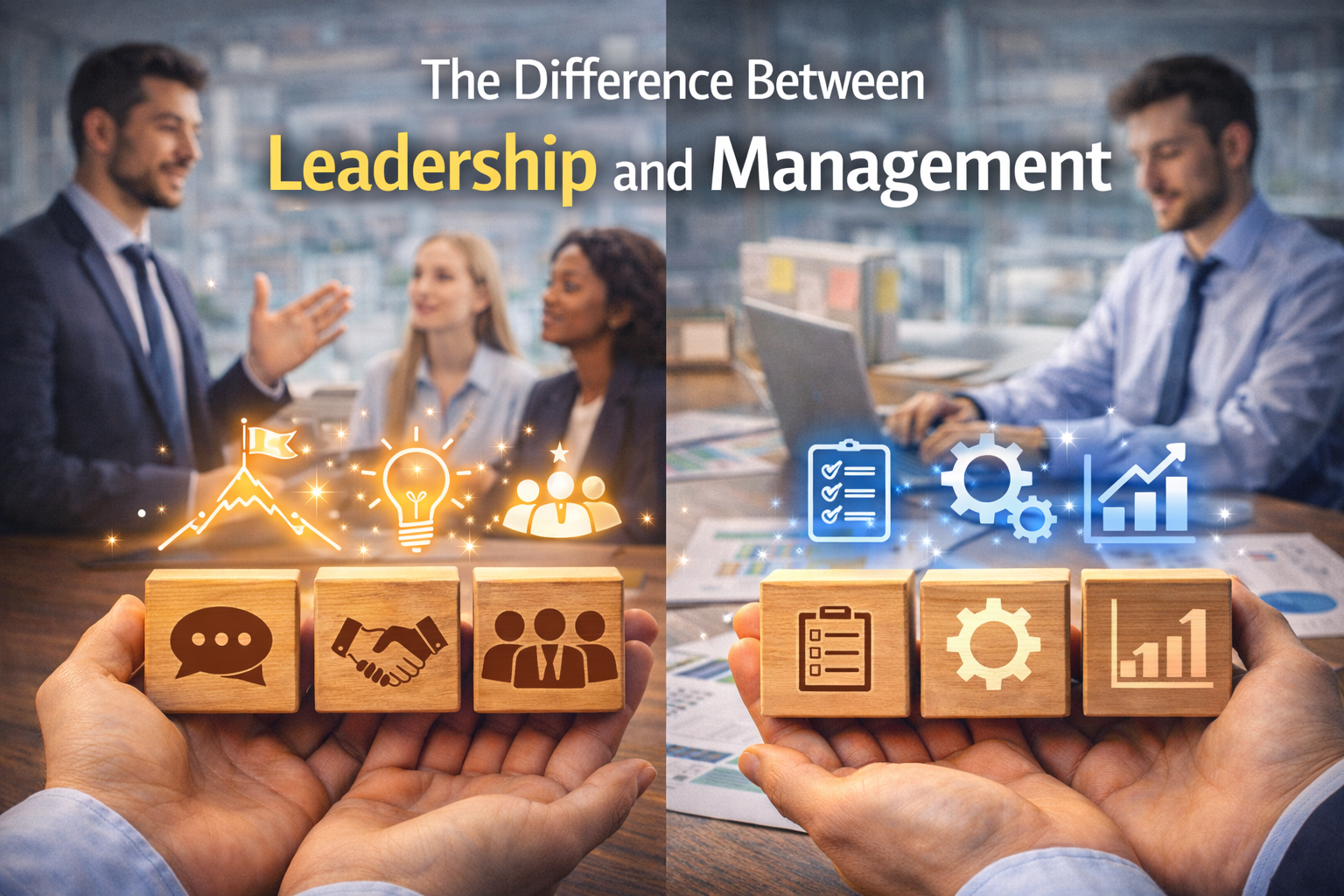
Leadership vs. Management: Real Differences Backed by Research and Corporate Evidence

Leadership and management are often used interchangeably. However, decades of research in organizational psychology, corporate performance studies, and real-world business experiments show that they represent distinct but complementary functions. Both are essential for organizational success but they influence performance in different ways. Understanding this difference is not just theoretical. Data from companies like Google, Microsoft, … Ler mais

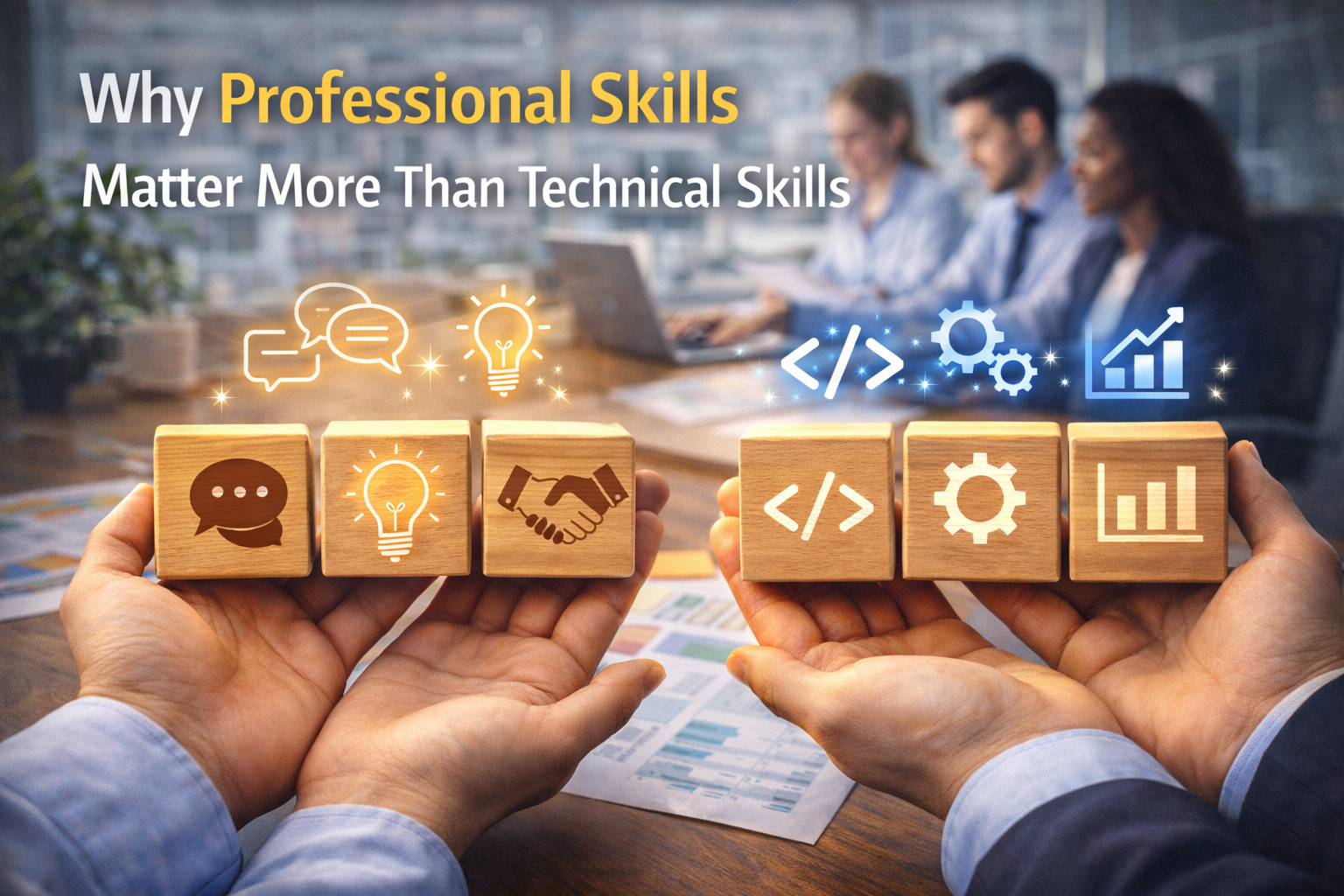
Why Professional Skills Matter More Than Technical Skills in Long-Term Career Success

In today’s rapidly evolving workplace, the definition of career success has shifted significantly. While technical expertise remains valuable, research consistently shows that professional skills often called soft skills or human skills play a larger role in long-term career performance and advancement. Employers increasingly look beyond academic qualifications or technical certifications. They focus on how individuals … Ler mais

How Professional Performance Works

Professional performance is often misunderstood as simply “working harder” or “producing more.” However, research in organizational psychology, behavioral science, and management consistently shows that performance is a multidimensional construct influenced by cognitive ability, motivation, leadership, work design, well-being, and environment. Understanding how professional performance works from a scientific perspective allows individuals to improve consistently while … Ler mais

What Professional Skills Really Mean in Today’s Workplace

The concept of professional skills has evolved significantly in the modern workplace. While technical expertise remains essential, a growing body of research shows that transferable skills often referred to as soft skills are critical predictors of long-term career success, leadership effectiveness, and organizational performance. Professional skills influence how individuals communicate, collaborate, adapt to change, manage … Ler mais

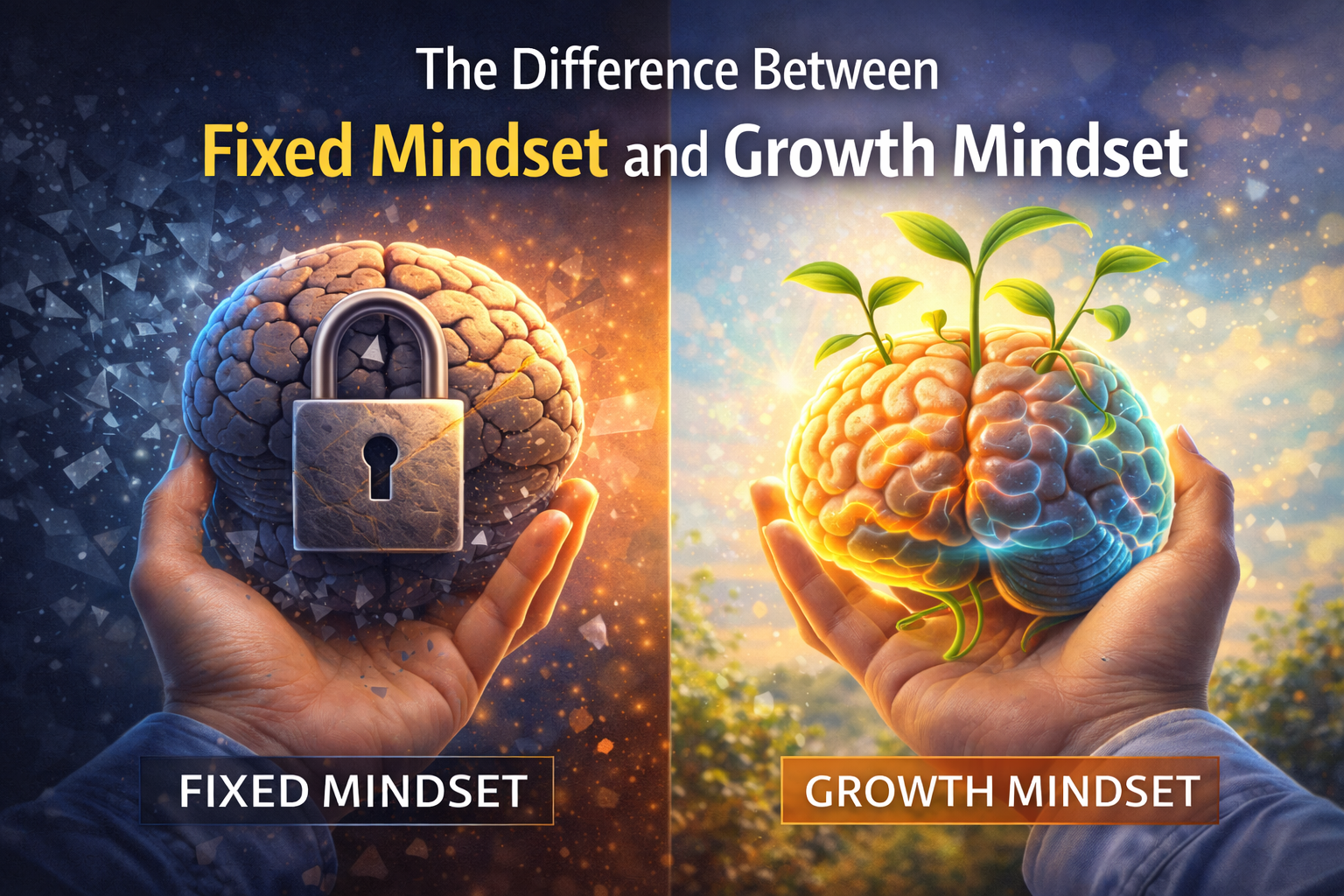
The Difference Between Fixed Mindset and Growth Mindset

The way people perceive their intelligence, abilities, and potential significantly influences how they learn, perform, and respond to challenges. In psychology, these beliefs are described as mindsets. Over the past two decades, research in educational, cognitive, and organizational psychology has examined how mindset shapes motivation, resilience, academic achievement, and professional growth. The distinction between a … Ler mais

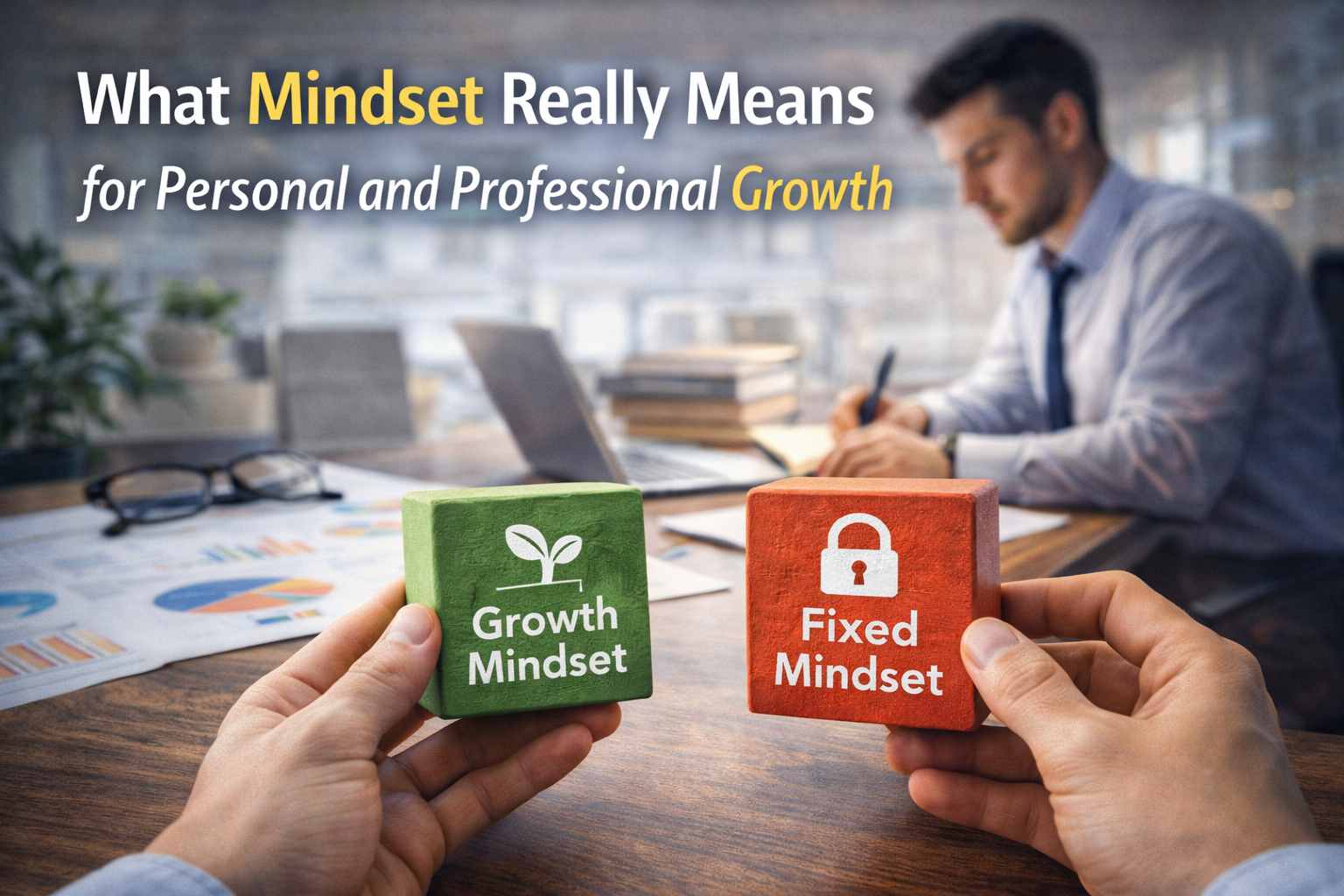
What Mindset Really Means for Personal and Professional Growth

The concept of mindset has become central in discussions about personal development and career success. While often used informally, scientific research in psychology and neuroscience shows that mindset significantly influences how individuals learn, adapt, perform, and respond to challenges. Understanding mindset from an evidence-based perspective allows individuals to approach growth with clarity, resilience, and long-term … Ler mais

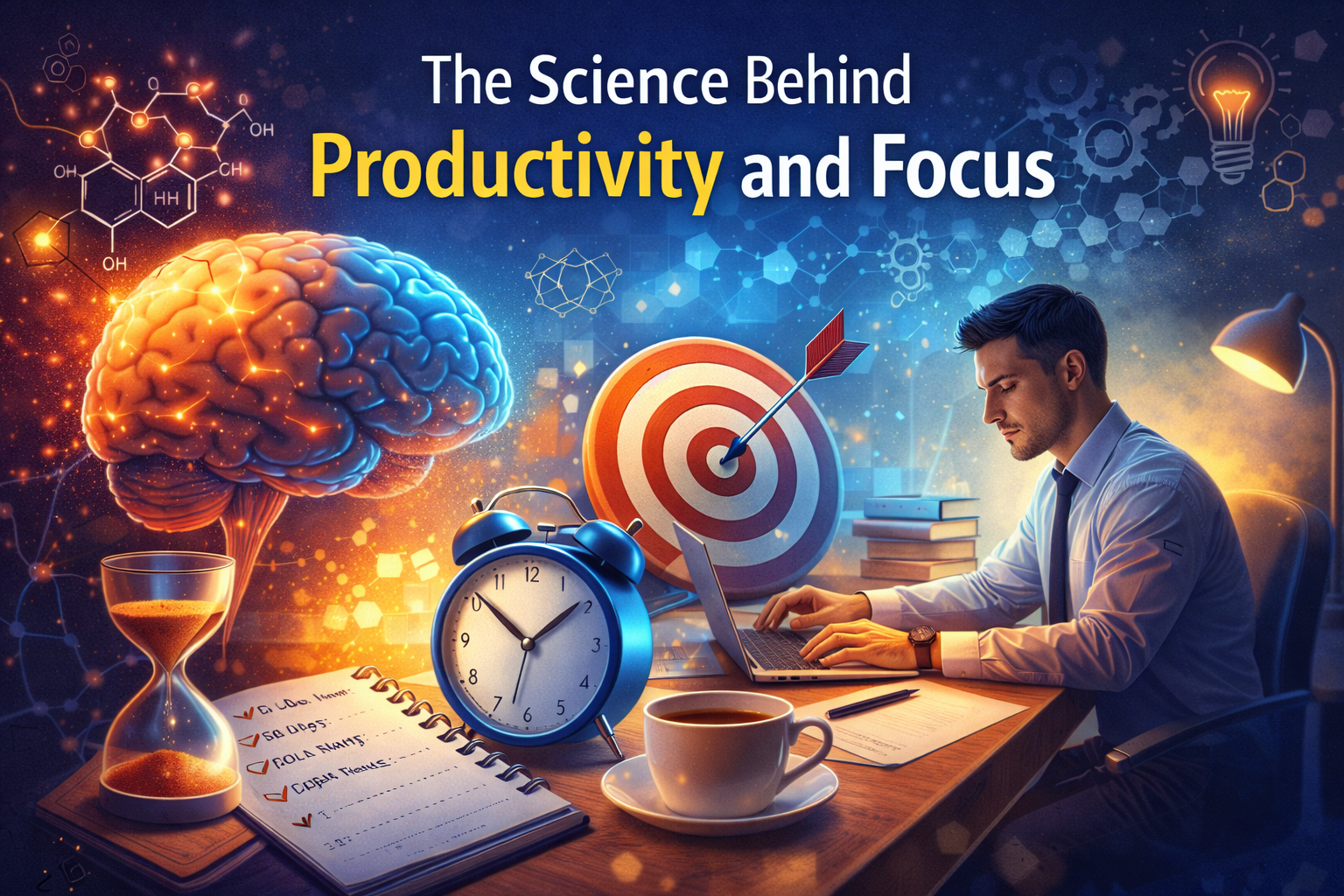
The Science Behind Productivity and Focus in the Modern Workplace

Productivity and focus are often described as matters of discipline or motivation. However, scientific research shows that both are deeply influenced by how the brain processes attention, manages energy, and responds to environmental stimuli. Understanding the neuroscience and psychology behind productivity allows professionals to work more efficiently, reduce cognitive overload, and sustain high performance over … Ler mais

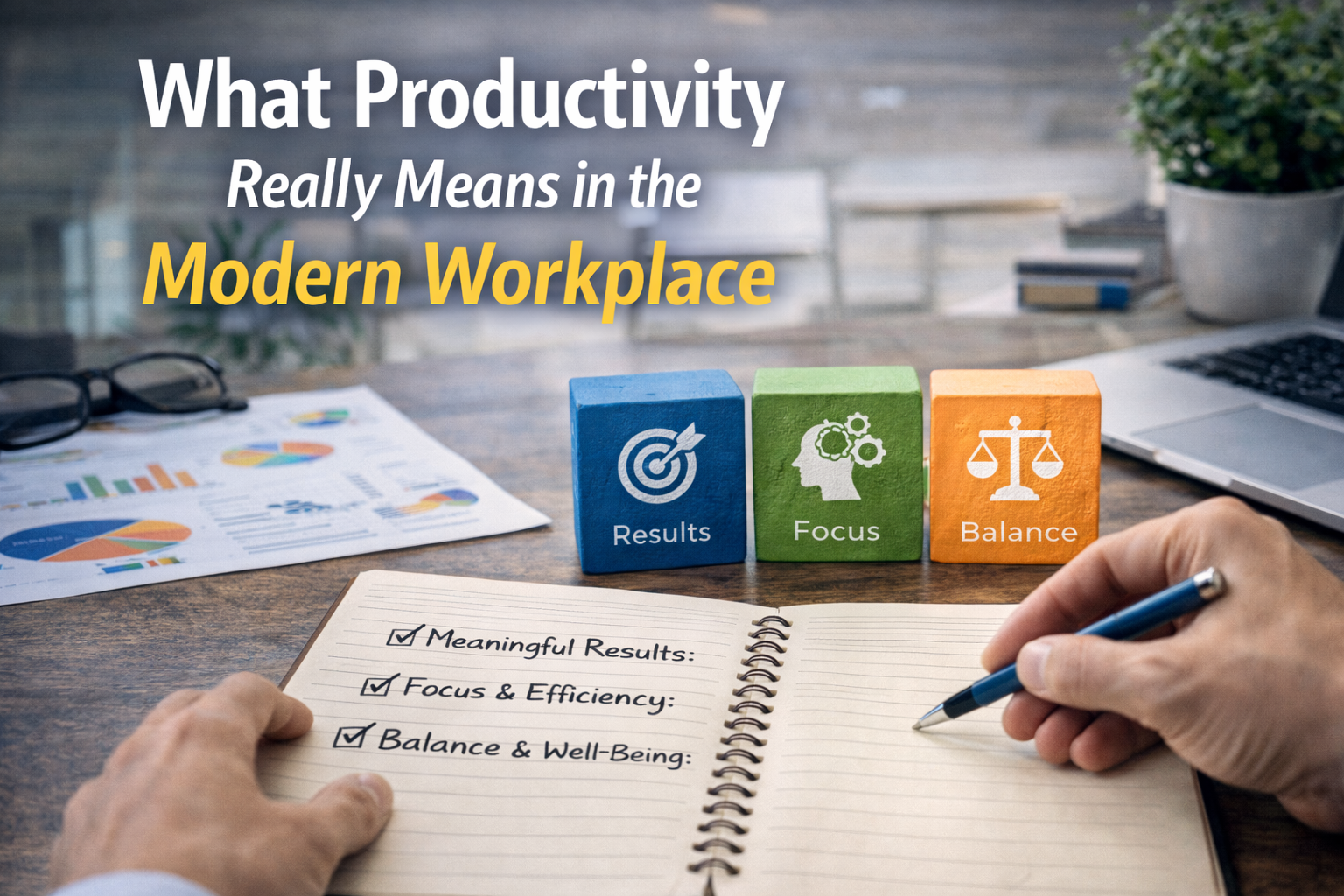
What Productivity Really Means in the Modern Workplace

Productivity in the modern workplace is often misunderstood. Many professionals equate productivity with long hours, constant activity, or multitasking. However, research in organizational psychology, neuroscience, and labor economics consistently shows that true productivity is not about doing more tasks. It is about producing meaningful results with focus, efficiency, and sustainability. Understanding productivity through an evidence-based … Ler mais

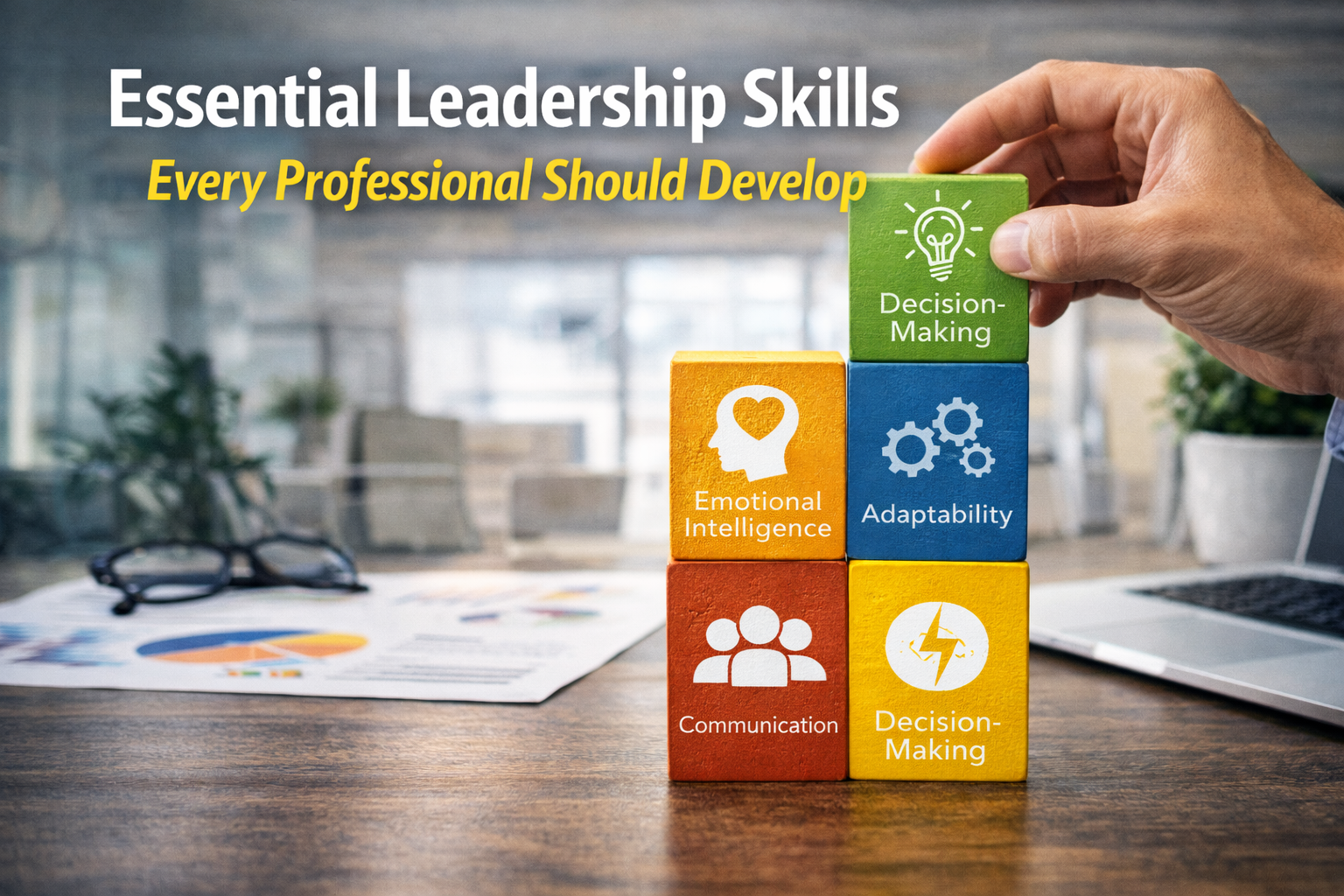
Essential Leadership Skills Every Professional Should Develop

Leadership is no longer limited to individuals in formal management positions. Contemporary research in organizational psychology, workforce analytics, and management science consistently shows that leadership skills are critical at every career stage. In modern workplaces characterized by collaboration, rapid change, and cross-functional teams, leadership is defined by influence, communication, accountability, and adaptability rather than hierarchy … Ler mais

What Leadership Really Means in the Modern Workplace

Leadership in the modern workplace goes far beyond holding a title or supervising tasks. Over the past two decades, research in organizational psychology, management science, and workforce analytics has shown that leadership is increasingly defined by influence, adaptability, and the ability to develop others rather than authority alone. As work environments evolve due to technology, … Ler mais